Our Learning
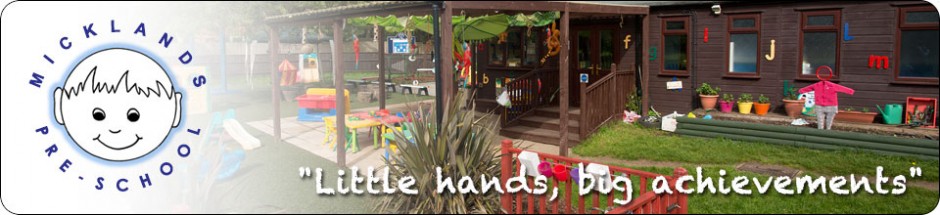
At Micklands Pre-School, we firmly believe in learning through play. We are fortunate to have our own building which has recently been refurbished together with a large garden. Children learn and develop well in enabling environments.
Each child has a keyworker who works in partnership with parents and carers to plan a curriculum based on individual needs and interests. This ensures each child’s early years experience is a happy, active, exciting and secure place to learn.
We respect that every child is unique and that they are constantly learning. By the time they leave our setting, we strive to ensure that they are resilient, capable, confident and self-assured.
Development Matters
Development matters is used as non-statutory guidance to support professionals working in early years settings. This guidance allows us to focus on the most important things for your child.
We respect that each child learns and develops at different rates. The development matters framework covers the education and care of all children in early years provision including children with special educational needs and disabilities.
Characteristics of Learning
The Characteristics of Effective Learning and the prime and specific Areas of Learning and Development are all interconnected. Characteristics of Learning include:
- Playing and exploring
- Active learning
- Creating and thinking critically
The ways in which the child engages with other people and their environment – playing and exploring, active learning, and creating and thinking critically – underpin learning and development across all areas and support the child to remain an effective and motivated learner.

How can I help with my child’s learning?
All the fun activities that you do with your child at home are important in supporting their learning and development and have a really long lasting effect on your child’s progress as they move through school. Even when your child is very young and is not yet able to talk, talking to them helps them to learn and understand new words and ideas.
Some examples of activities to support your child at home could be:
- Talking with your child about their day or interests, model language and turn-taking in conversations.
- Reading with your child in a relaxed environment, discussing aspects of the story afterwards.
- Spending time outdoors enjoying a walk collecting treasures, listening to sounds in the environment or a trip to the park.
- Ask your child to help you with every day tasks such as cooking, cleaning or shopping. There are learning opportunities to be had in all areas of these activities.
- Help your child become independent with putting on their own coat or washing their hands.


Progress Checks and Profiles
When your child is 2
At some point after your child turns 2, your child’s keyperson will meet with you to write a summary of how your child is progressing against the 3 prime areas of learning:
- Communication and language;
- Physical development; and
- Personal, social and emotional development.
This is called the progress report at age 2. This report will highlight areas where your child is progressing well and where they might need some extra help or support – and you and other family members or carers can work with the keyperson to help. You might find it useful to share the information from the report with other professionals such as health visitors (who can use it as part of the health and development review).
Before your child starts primary school
In the summer term before your child starts primary school, they will have a transfer report written by their keyworker. This will highlight their achievements, characteristics and maybe any support required. This can help your child’s transition to school go more smoothly and provide their new teacher with useful information.
Where can I go for further information?
Our Pre-School Supervisor and practitioners are more than happy to talk with parents in relation to development matters and their child’s individual development. We welcome you asking as many questions as you need to.
The full version of development matters, including the early learning goals, is available for you to view at Development Matters.
